A Summer Break to Refresh
It has been a while since my last post. Summer does that to me: the good weather pulls me outside instead of keeping me at the computer all day, and honestly, I let it. I use these months to rest, take some holidays, and refill the tank with new experiences, time in nature, and conversations with people I do not see often enough.
I believe deeply in working on what you love. In my case that is character creation. But I believe just as much in resting. If we spend every hour working, we stop feeding ourselves new input, and without new input it gets very hard to have new ideas when a problem shows up. Your brain needs idle time to do its quiet work. Inspiration never shows up on command; the most you can do is leave the door open for it.
One of those opportunities this summer was Mundos Digitales, the animation, VFX, and games festival held every July in A Coruña, Galicia.
Five days by the sea
Mundos Digitales is the biggest festival of its kind in Spain, and this year was the XXIV edition, held at Palexco, right on A Coruña’s seafront. Around 1,200 people attended, and I would add some 300 more who never set foot in the venue: they travel to the city anyway, to relax and to do their networking in what everyone calls SubMundos, the meetings and gatherings that orbit the official program.
The conferences themselves run for three days, July 9 to 11, though I stayed five. You want some margin on both ends, and A Coruña makes that an easy decision.
The program is only part of it. Alongside the conferences there is a recruitment fair where new talent can show their work directly to recruiters and supervisors, who take the time to guide them on refining a portfolio and landing that first job. There are small “coffee with” sessions to sit down with a handful of top industry names. The short film competition rounds it all off, with national and international shorts competing for the top prizes.
This year the competition gave me a special reason to smile. El fantasma de la Quinta, from Ilusorium Studios, took the international prize, and deservedly so: it is a professional production, and the polish and depth that an experienced team brings show in every frame. And Ramen for Two, made by students at La Salle URL, where I teach, won the best national short. Seeing a student short share a screen with work of that caliber, and walk away with its own prize, left me proud and simply happy.
What everyone was talking about
Every festival has a pulse, a handful of topics that keep resurfacing in talks and hallway conversations. This year I would name three.
Gaussian splatting, everywhere. The technique has clearly crossed from research curiosity into production conversation. Framestore’s Kevin Sears walked through how they are using it for photoreal volumetric performances together with Infinite Realities, and he did not hide the rough edges: the workflows are young, the tooling is uneven, and everyone is still inventing pipeline conventions as they go. But the results keep landing, and new teams keep forming around it. It reminded me of the early days of any technology that ends up sticking.
Houdini as connective tissue. Talk after talk leaned on Houdini as the place where new techniques get prototyped and wired into real pipelines, from splats to simulation to procedural everything. It has quietly become the common ground where the experimental and the production-ready meet.
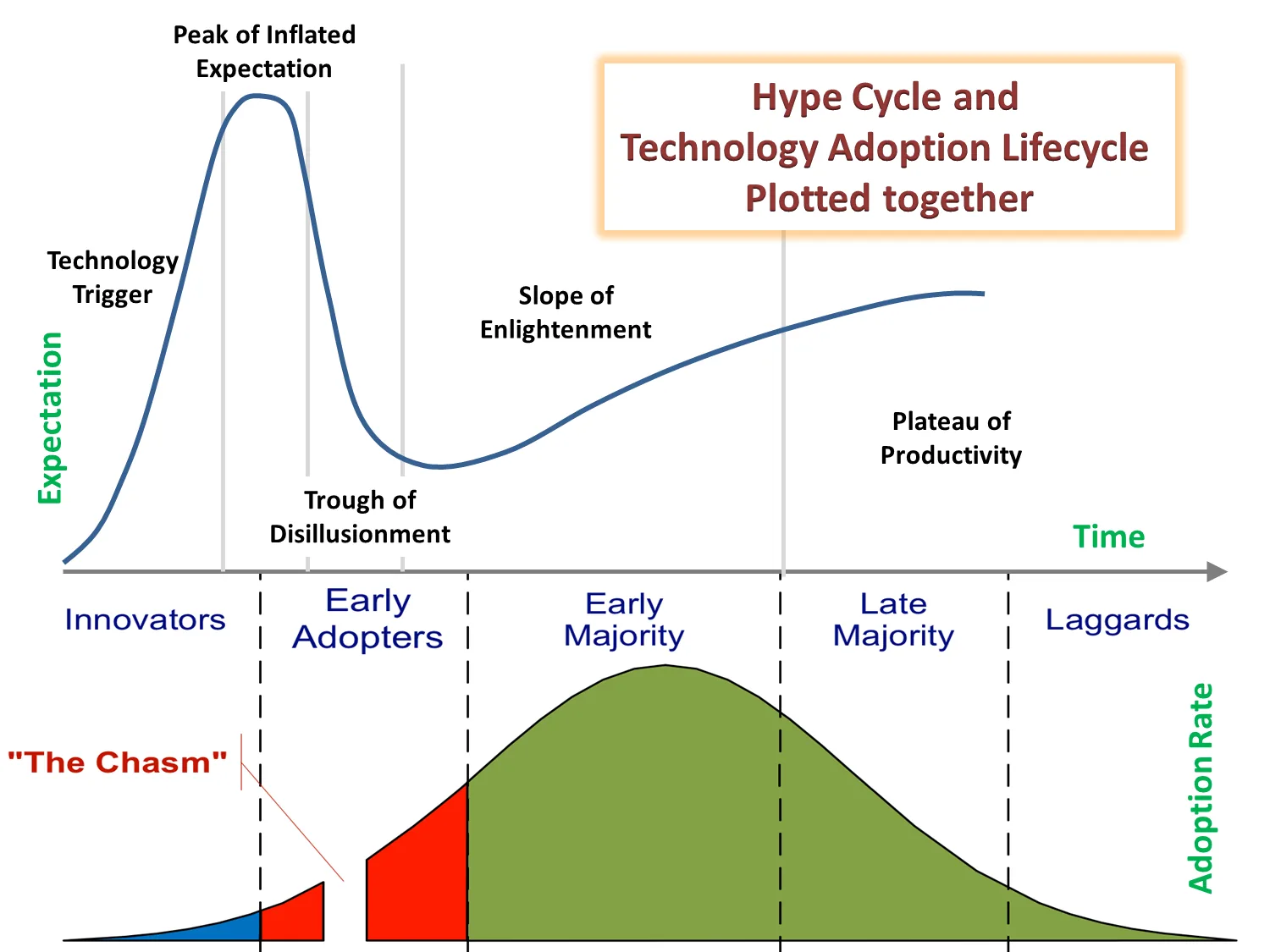
AI, with intention. Of course AI was on every stage, but the framing struck me as healthier than the online discourse. The recurring question was how to integrate it into real pipelines, past the hype, in a way that protects the artists’ craft and rewards everyone involved fairly. Less magic wand, more engineering and ethics.
That last conversation is starting to get structure, too. Spain finally has an official VES section: the Visual Effects Society approved it in January, making Spain one of only 18 territories with formal representation, with the goal of unifying local talent and connecting it with the international productions that keep arriving here. A new association called AI Assemble was also presented at the festival, bringing together studios, labs, professionals, and institutions to build a shared, reasonable strategy for applying AI in the creative industries. People are organizing around this technology, and that alone says a lot.
Reading the change
I do not want to paint a naive picture. The industry is going through a rough stretch. Layoffs have hit both games and VFX hard as companies reshape themselves around new business models and revenue channels. Several talks were frank about how difficult it is to build something on your own: putting together a feature film means years of development, hunting for the right partners, and assembling a crew piece by piece. The sessions about DinoGames, the animated feature from Goya winners Carlos F. de Vigo and Lorena Ares, made that path very concrete: a Spain and Belgium co-production that has been years in the making, walking through everything it took to move from concept to screen.
And yet, sitting in those rooms, the feeling was not decline. It was adaptation. Seniors do not want to be in an office five days a week anymore, so studios are going more distributed. Work is redistributing, and new hubs are absorbing it. The clearest example is the Canary Islands: STIM, the studio behind work on The Wild Robot and Shōgun, just opened a new site in Tenerife aiming to grow past a hundred people, joining more than thirty companies and around two thousand professionals already working in animation and VFX from the islands. Hard to read those numbers as anything but growth.
A level is a story
One talk I want to highlight came from close to home. Yago Pérez, one of the art directors at Black Shamrock, the Virtuos studio where I work, gave a session on designing levels in games, and his thesis was simple and powerful: a level is not buildings and a road, it is a story that guides the player.
He showed how lighting, shape language, and composition steer you through a space without a single UI marker. How the density of elements, more vegetation here, fewer props there, nudges you toward one path or another. And how exploration has to be rewarded: if a player leaves the main route, whatever they find should feel worth the detour, never an empty corner that whispers “you came here for nothing.” He backed everything with examples from other games and with his own lighting tests demonstrating how far light alone can carry a narrative.
Coming home
At the festival I got to meet old friends and make new ones, and every single one of them shares the same drive. They have ideas for better workflows, better tools, better assets, better ways to tell stories. The talks kept pushing quality and technology forward, and the conversations in between raised the bar just as much.
After this kind of event I always come home the same way: refreshed, batteries charged, a head full of fresh ideas, and one thought looping in the back of my mind: what we get to do for a living is genuinely cool. Whatever the headlines say, this industry keeps moving forward, carried by a community that truly loves what it does. That energy is the real souvenir, and it is what I am taking into the new season.